Universidade do Estado do Amazonas: two sciences, prosthetics e inclusive education
In Manaus, the NAO humanoid robot supplied by Somai became a research platform in two fields simultaneously — the development of lower limb prostheses using Amazonian materials and the teaching-learning process for special education students.
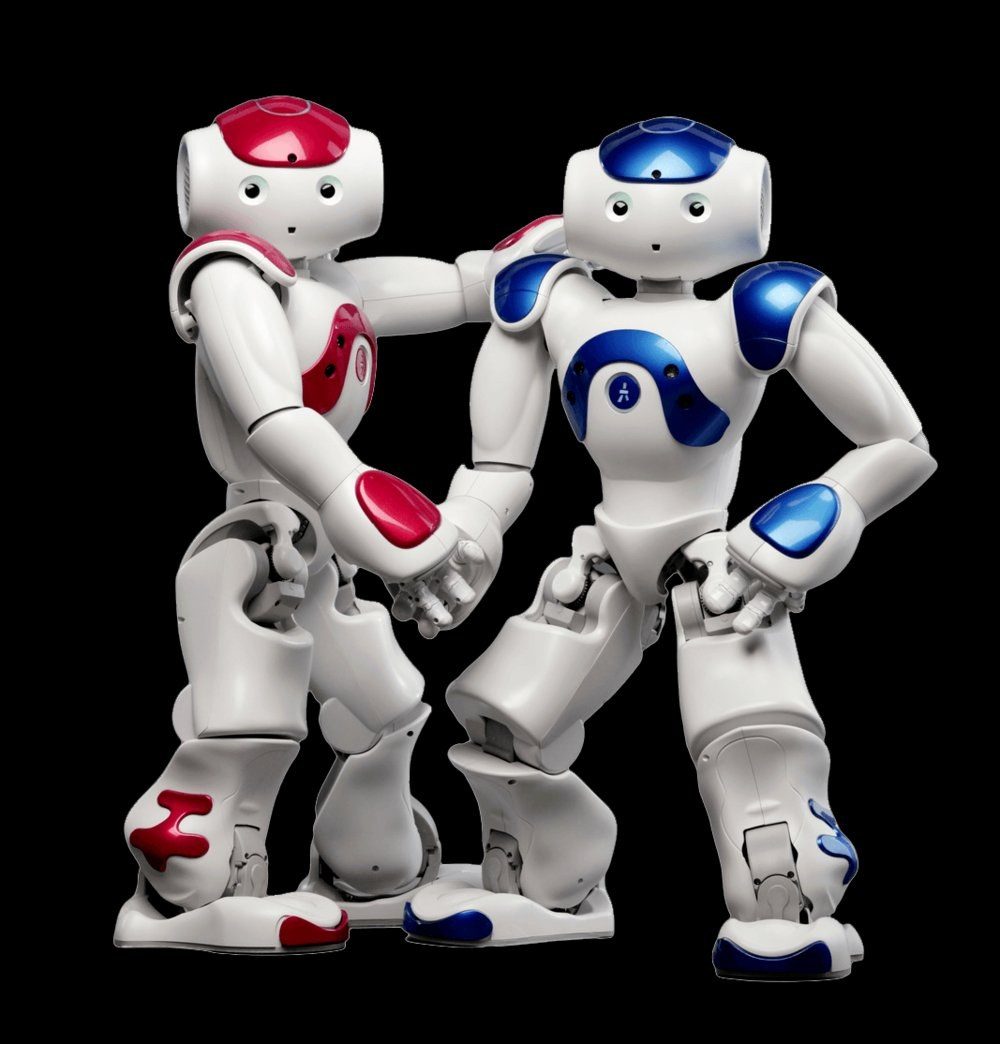
One piece of equipment addressed two problems in Manaus
The Assistive Technology Center at the Universidade do Estado do Amazonas develops lower limb prostheses for those who lack access to high-tech imported products — including a bioprosthesis for the foot and ankle made from laminated Amazonian wood, with clinical evaluation in amputee patients.
Research of this nature encounters a practical obstacle: to evaluate a lower limb prosthesis, a reliable, repeatable, and measurable gait pattern is needed. People don't repeat the same step twice. A humanoid robot does.
In the same city, another problem: the education network in Amazonas has few schools equipped with technology to serve students with disabilities.
A single piece of equipment addressed both.
Supply and support for an operation far from major centers
Supply of the NAO humanoid robot
Somai is the exclusive distributor of the NAO in Brazil and supplied the unit that currently operates at the Assistive Technology Center in Manaus. At the time of the published works, it was the only NAO robot in the city.
Support for an operation far from major centers
Keeping research equipment operational in Manaus requires logistics and support that foreign suppliers cannot provide. This is where national presence ceases to be a detail and becomes a condition.
The robot as a gait reference
The center is coordinated by Professor Marlene Araújo de Faria, a mechanical engineer with a doctorate in Biotechnology, whose work includes simulation, prototyping, and testing of lower limb prosthesis prototypes — among them the bioprosthesis project for the foot and ankle using Amazonian woods and a low-cost mechanical knee project.
Among the works linked to the center is a study dedicated to NAO humanoid robot gait cycle: the humanoid offers a controlled and repeatable walking pattern, useful as a reference in the development and evaluation of lower limb devices.
This is an uncommon use of humanoid robots in Brazil — and shows that the platform serves far beyond programming classes.
The robot as a mediator in special education
The same coordination applies the NAO as a communication and integration agent in the teaching-learning process of special education.
A master's research conducted from the core investigated the inclusion of the humanoid robot as a technological resource in the teaching-learning of Portuguese language for special education students, with support at the core itself and application in schools. Among the observed aspects are communication, integration, socialization, motivation, teamwork, and performance in solving proposed activities.
The stated motivation for the research is direct: there is a lack of schools with a technological structure for specialized educational services in Amazonas.
Source: dissertation by Lidiane de Souza Assante, repository of the Universidade Federal do Amazonas.
Three lessons for any institution
One equipment, two budgets
The same robot served biomedical engineering research and inclusive education practice. For public institutions, this changes the equation: the investment is justified by more than one front and more than one department.
The humanoid is a platform, not a toy
Gait, kinematics, social interaction, language. What defines the scope is the project of the operator — and the support of the provider.
Distance cannot be a sentence
Cutting-edge equipment operating in Amazonas can only be sustained with a national supplier, available parts, and someone who answers the phone.
The project in numbers and facts
| Institution | Assistive Technology Center — Universidade do Estado do Amazonas (UEA), Manaus |
| Coordination | Prof. Marlene Araújo de Faria |
| Equipment | NAO humanoid robot |
| Supply | Somai — exclusive distributor of NAO in Brazil |
| Application areas | Research on lower limb prosthetics and special education |
| Associated academic production | Study of the NAO gait cycle; dissertation on NAO in Portuguese language teaching in special education |
Sources: public records of academic production from the Assistive Technology Center of UEA; master's dissertation deposited in the UFAM repository.
Technology integrated into education since 1990
In the market since 1990, Somai specializes in integrating new technologies into education. Technical-pedagogical excellence is supported by a multidisciplinary team of pedagogues, teachers, psychologists, graphic designers, administrators, programmers, and technicians, who work to deliver high-impact educational technology solutions.
More than 35 years, 2,500 schools served, 25,000 educators involved, and 2.1 million students impacted.
What Somai implemented
Other similar cases
The same robot can serve your laboratory and to your classroom
Somai EdTech
Somai provides, implements, and maintains humanoid robots in universities, educational networks, and research centers across Brazil — and develops the artificial intelligence layer that expands what these already installed pieces of equipment can do.