What Brazilian science has already measured about the humanoid robot in the classroom
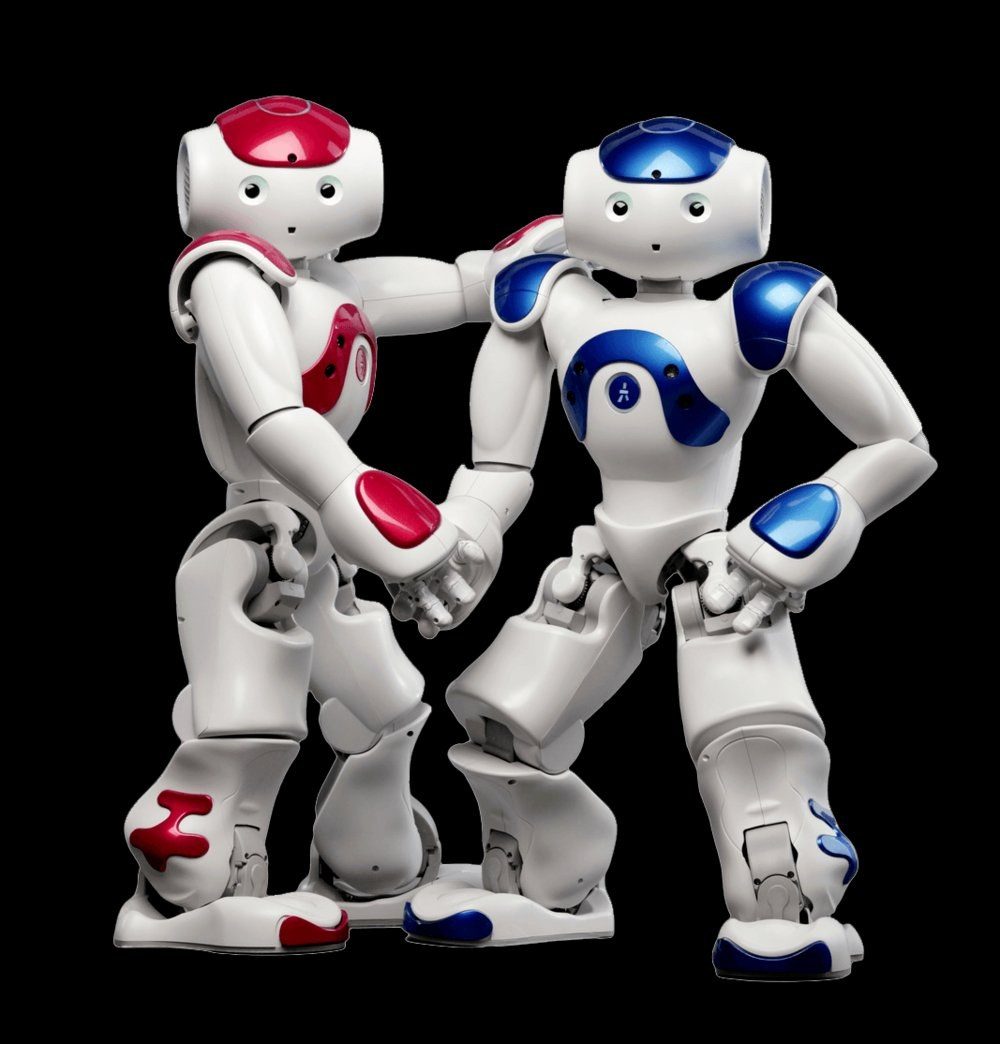
Research by USP's Institute of Mathematical Sciences and Computing tested the NAO humanoid with teenagers from public and private schools. The results were published. Somai partnered on one of the projects, funded by CNPq.
Almost every educational technology promise is sold without numbers. Here there are numbers.
Geometry with NAO: 84.61% vs. 60%
In a Master's research project at ICMC/USP, supervised by Professor Roseli Romero, the NAO robot was programmed with computer vision to recognize flat geometric shapes and conduct activities with 62 teenagers aged 13 and 14, from public and private schools in São Carlos.
The robot gave clues about the shape being sought. When correct, it opened its arms and lit up the LEDs in its eyes; when incorrect, it lowered its head. The reactions were programmed to create empathy with the young people.
In the questionnaire applied at the end, the students who had classes with the humanoid scored correctly 84,61%, versus 60% of those who did not have contact with the robot.
Source: Jornal da USP, "Robô professor ensina geometria a adolescentes" (Robot teacher teaches geometry to teenagers), 09/14/2016. Research by Adam Moreira, supervised by Roseli Romero (ICMC/USP).
It's not enough to have the robot: its behavior changes the outcome
A second study, by Daniel Tozadore, also supervised by Roseli Romero, divided students into two groups. For one group, NAO was programmed to be sociable — it stood up, waved, asked the student's name, celebrated correct answers. For the other, it remained seated and barely interacted.
Students who worked with the more interactive robot showed greater motivation to study in subsequent sessions, with increased concentration and better content assimilation. In total, 92 teenagers participated in the tests.
The practical conclusion: the result doesn't come from the equipment, it comes from how it's programmed and conducted in class.
Source: Jornal da USP, 09/14/2016.
The words of the person who supervised the research
"The differential of these works is the use of a humanoid robot: while most research in the area is done with robotic kits, NAO offers speech, image recognition, and gestures — which makes social interaction much greater."
Roseli Aparecida Francelin Romero — Professor at ICMC/USP, research supervisor · Jornal da USP, 2016Partner in an R&D project funded by CNPq
Somai was a partner in the project "NAO Technology in Brazilian R&D&I", funded by CNPq under the RHAE program, with research conducted at ICMC/USP.
The project envisioned using the NAO robot in complementary areas:
- development of a humanoid robot soccer framework;
- creation and experimentation of educational human-robot interaction applications with Elementary and Middle School students;
- advancement of humanoid robotics research in Brazil.
The project record describes the partnership with Somai due to its work in schools, from Early Childhood Education to High School, contributing to the development of the field. The project is concluded.
Source: project record in the academic CV of researcher Fernando Zuher (ICMC/USP), participant in the research.
What this research developed in the robot
Fernando Zuher's work, also advised by Roseli Romero, expanded the NAO's capabilities: using a motion sensor, the robot began to recognize commands given by gestures and to imitate human movements, mapping the body's joints — shoulder, elbow, hip, knee, and neck — in three dimensions.
The research gained media attention in outlets such as Portal da USP and Exame magazine, and pointed to applications in physical therapy and the teaching of mathematics in elementary school.
Sources: Portal USP and ICMC/USP, 2012; Exame, 2012.
Three conclusions that apply to any network
The technology has Brazilian academic backing
It's not a vendor's promise: it's a result measured by a public university, with real students, in real schools.
The gain is in mediation, not equipment
Both studies point to the same conclusion: performance depends on how the robot is programmed and operated. That's why Somai doesn't just deliver the robot — it delivers teacher training and support.
Somai is on the inside of the research
Participating in an R&D project with CNPq funding alongside ICMC/USP is not the same as reselling imported equipment. It means understanding the platform from the inside out — which makes a difference when a network needs support, adaptation, or modernization years after purchase.
Who researches the robot at USP
The word from those who advised the research with the NAO at ICMC/USP.
The project in numbers and facts
| Institution | Institute of Mathematical Sciences and Computing (ICMC) — USP São Carlos |
| Laboratory | Robots Learning Lab (LAR), Bioinspired Computing group |
| Academic coordination | Prof. Roseli Aparecida Francelin Romero |
| Project with Somai | "NAO Technology in Brazilian R&D&I" — CNPq / RHAE (concluded) |
| Equipment | NAO humanoid robot |
| Researched applications | Teaching of mathematics and geometry, human-robot interaction, imitation of movements, robot soccer |
Cited sources: Jornal da USP (2016); Portal USP and ICMC/USP (2012); Exame (2012); public record of the CNPq-RHAE project "NAO Technology in Brazilian R&D&I."
Technology integrated into education since 1990
In the market since 1990, Somai specializes in integrating new technologies into education. Technical-pedagogical excellence is supported by a multidisciplinary team of pedagogues, teachers, psychologists, graphic designers, administrators, programmers, and technicians, who work to deliver high-impact educational technology solutions.
More than 35 years, 2,500 schools served, 25,000 educators involved, and 2.1 million students impacted.
What Somai implemented
Other similar cases
Does a robot in the classroom work? USP measured it.
Somai EdTech
Somai brings to your project the same platform studied in Brazilian universities — with teacher training, local support, and the experience of those who participated in the research, not just the sale.