The robot an entire network came to call its own
Eight NAO humanoids, eight cities, from early childhood education to high school. Supply, implementation, and teacher training by Somai. In operation since 2021 — and still central to the network's communication in 2026.
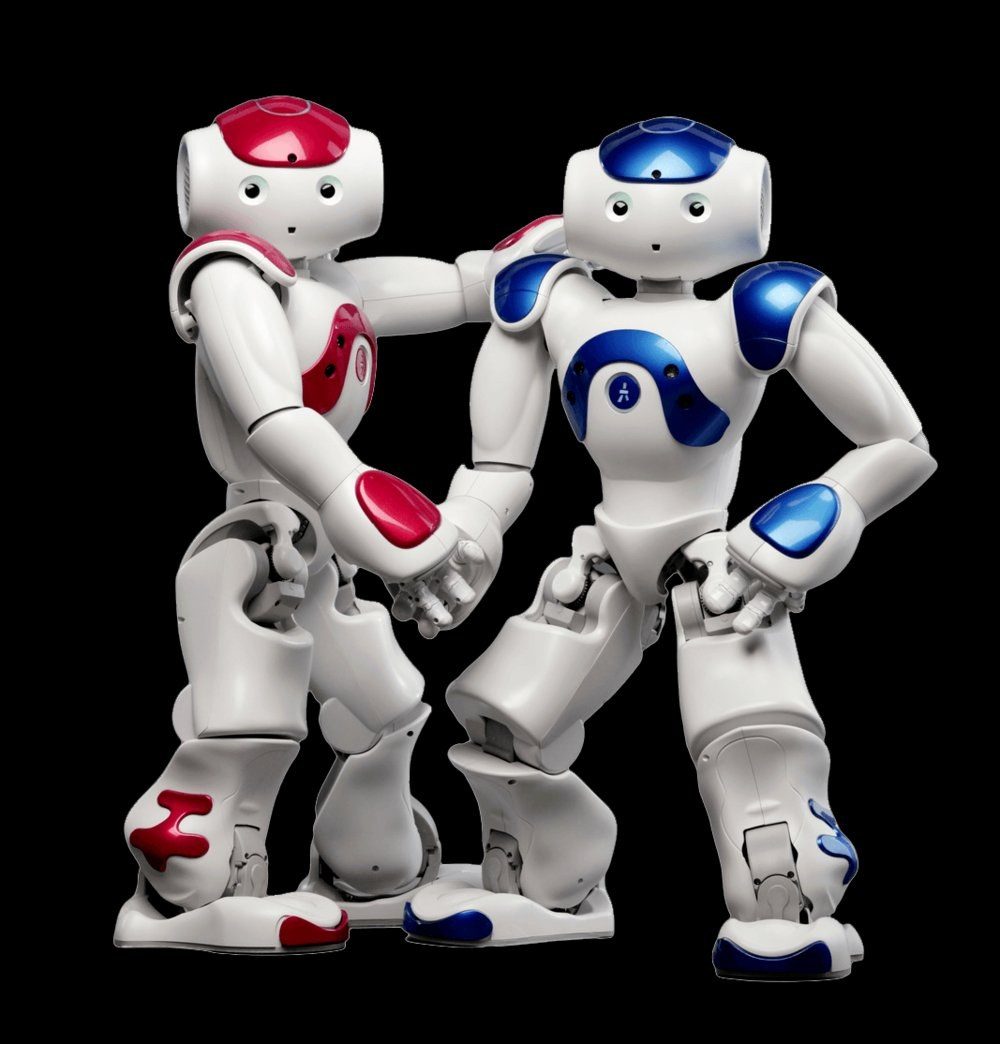
A technology for all of basic education
SESI Santa Catarina, part of the FIESC System, already had robotics in its curriculum. What was missing was a technology capable of spanning all stages of basic education without changing platforms, being programmed by the students themselves, operated by the network's teachers — and creating enough engagement for students to want to encounter it again in the next class.
A humanoid solves all four points simultaneously. That's why the decision wasn't for just another robotics kit.
Investment in training, not equipment
The purchase was treated as a strategic investment in training, not as equipment acquisition.
"Investments in the educational area seek training that is more connected to a job market strongly influenced by technology. The robot's interaction with students allows for linking theory and practice, making learning more interesting and creative."
Fabrizio Machado Pereira — Director of Education and Technology, FIESCFrom supply to ongoing support
Supply
Somai is the exclusive distributor of NAO in Brazil. The eight SESI/SC units came through this channel — there is no other way to acquire the equipment in the country.
Distributed implementation
The robots went to eight different cities. This requires a single configuration standard and decentralized support, not a concentrated delivery to a model laboratory.
Teacher training
The network's teachers were trained to operate the robot and explore its pedagogical possibilities before classroom use. This is the stage that determines whether the robot becomes routine or ends up in a closet.
Ongoing support
Equipment in daily use, spread across eight cities, requires maintenance and updates over the years. This is what sustains five years of uninterrupted operation.
What teachers started doing
"We managed to program the robot for games and quizzes, teach the alphabet and words, tell stories, and interact in various ways with children and teenagers — in addition to facial recognition, which associates a person's face or an object with the correct name."
Filipe Ribeiro Da Cas — Systems Development Technical Course Teacher, SESI/SCTeachers in the network consider the robot a good tool for teaching programming: the system is simple enough to serve as a foundation for anyone interested in the IT world.
The network named the robot
When the equipment arrived, teachers told students that the robot had come from another planet and couldn't remember its own name. The vote to choose a name mobilized over 2,000 students. The winner, SEBIT, is what the network calls it to this day. No marketing campaign can buy that level of appropriation.
The robot became an interlocutor
"The robot's mere presence already creates a memorable experience and a sense of familiarity with robotics. Due to its charisma, it becomes a privileged interlocutor, accessing children's emotional space — and can adopt exemplary behaviors that students take more seriously precisely because they come from a third party."
Othon Neves — Product Developer, SESI/SCInclusion
The robot's ability to imitate human movements was leveraged with autistic students and those with learning difficulties: the robot demonstrates gestures and the emotional context in which they are used, and the child imitates — practicing expression and social skills in a non-judgmental environment.
From a classroom resource to the institution's brand
In 2026, the robot continues to be part of Escola SESI/SC's institutional communication, including on its Early Childhood Education page. In November 2025, it was taken to a municipal school in Caçador for an activity with students and to announce the Regional Robotics Festival, with the presence of FIESC's regional vice-presidency.
"Practical and interactive experiences like the robot's visit encourage student leadership and bring them closer to the competencies required by the job market and by life."
Graziela Pereira da Silva — Executive Manager, FIESCRegional vice-president Leonir Tesser reinforced the role of technology as an ally in education. The project ceased to be a classroom resource and began to represent the institution's brand outside the network.
From Santa Catarina to other regions
The path opened in Santa Catarina was replicated in other regions. SESI of Rio Grande do Norte acquired a NAO V6 in 2023 and trained its team for pedagogical use.
"The robot creates a judgment-free and anxiety-free learning environment where neurotypical and neurodivergent students safely practice social and emotional skills."
Ana Karenine Medina — Education Manager, SESI/RNThose living the project at SESI
Managers and teachers from the network who integrated the humanoid robot into the school's routine.
Artificial intelligence on the already installed base
Still in 2022, SESI/SC itself indicated where the project would go: Othon Neves assessed that the robot can be connected to artificial intelligence — and that, when considering this, the potential becomes practically unlimited.
This is exactly what Somai is currently developing for the installed base: a conversational AI and natural language programming layer that modernizes the NAO robots already in operation, without requiring equipment replacement.
The project in numbers and facts
| Institution | SESI Santa Catarina — FIESC System |
| Equipment | NAO — humanoid robot, approximately 60 cm (2 ft) tall, manufactured by Aldebaran / SoftBank Robotics |
| Units | 8 |
| Cities | Criciúma, Brusque, Rio do Sul, Itajaí, Lages, Videira, São Bento do Sul, and Joinville |
| Target Audience | From early childhood education to high school |
| Somai Deliverables | Supply, implementation, teacher training, and continuous support |
| Start of operation | 2021 |
Sources: CNI News Agency and FIESC (July 2022); Caçador Online Portal (November 2025); SESI/RN (2023 and 2026); institutional pages of Escola SESI/SC.
Technology integrated into education since 1990
In the market since 1990, Somai specializes in integrating new technologies into education. Technical-pedagogical excellence is supported by a multidisciplinary team of pedagogues, teachers, psychologists, graphic designers, administrators, programmers, and technicians, who work to deliver high-impact educational technology solutions.
More than 35 years, 2,500 schools served, 25,000 educators involved, and 2.1 million students impacted.
What Somai implemented
Other similar cases
Your network already has robots. Do they still teach?
Somai EdTech
Somai supplies, implements, trains teachers, and keeps Brazil's largest base of educational humanoid robots in operation — and modernizes existing classroom equipment with artificial intelligence.